Muay Thai Clinch Basics: How to Control a Fight Up Close

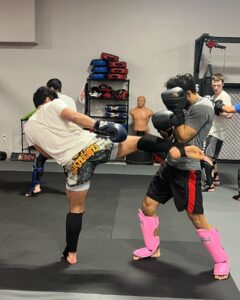
When our coaches talk about Muay Thai, one of the first things they emphasize is the clinch. A clinch is a close-range standing position where fighters control posture and balance to limit strikes while creating opportunities for knees, elbows, and sweeps. It is one of the most important skills in Muay Thai and one of the most misunderstood.


Many people imagine Muay Thai as a long-range striking style built around powerful kicks and sharp elbows. Anyone who trains regularly knows the clinch is where real control is developed. At Ground Control Columbia, we dedicate significant time to clinch training because it allows fighters to take command of a fight when distance disappears, and exchanges become tight.


From years of coaching students of all levels, we see the same truth over and over. The clinch is not about brute strength. It is about balance, posture, timing, and awareness. When used correctly, it slows the fight down, drains an opponent’s energy, and allows you to stay calm while they struggle to regain control.

What the Muay Thai Clinch Really Is

When we introduce the clinch to students, we describe it as a standing control position, not a wrestling exchange. The Muay Thai clinch focuses on breaking your opponent’s posture while maintaining a strong base of your own. Unlike boxing clinches that are often used only to reset, Muay Thai clinching is active and intentional.


From this position, fighters can land knees, elbows, and sweeps while limiting their opponent’s striking options. Our coaches often explain that a strong clinch forces your opponent to carry your weight, constantly fight for posture, and remain defensive. Over time, this pressure wears them down physically and mentally.


At Ground Control Columbia, we teach students to enter the clinch with purpose. Rushing in without structure usually leads to mistakes, so we focus on feeling the position, building confidence, and developing control step by step.

Posture and Balance Come First

One of the first lessons we coach in the clinch is posture. Without solid posture, control disappears quickly. Fighters who drop their head or let their hips drift backward find it easy to lose balance.


Proper clinch posture means staying tall through the spine, keeping the hips under the shoulders, and remaining light on the feet. Our coaches constantly remind students that small foot adjustments matter far more than trying to overpower a position. Balance allows you to deliver strong knees while staying protected.


Good posture also keeps you safer. When your alignment is strong, exposure to elbows is reduced, and your opponent has a harder time controlling your head or breaking your stance.

Hand Positioning and Control

Hand placement is an area our coaches frequently correct because it has such a major impact on control. One common clinch position is the double collar tie, where both hands control the back of the opponent’s head. From there, posture can be manipulated, angles created, and knees delivered effectively.


That said, clinch control extends far beyond one position. Inside control, overhooks, underhooks, and wrist control all play an important role. The objective remains consistent. Break your opponent’s posture while protecting your own.


We often remind students to think of their hands as guides rather than clamps. Pulling too hard wastes energy and limits mobility. Subtle movement combined with well-timed pressure creates far more control with far less effort.

Using Knees and Elbows Effectively

Once control is established, offense becomes efficient and calculated. Knees are the primary weapon in the clinch, especially to the body. Our coaches emphasize body knees because they disrupt breathing, drain energy, and accumulate damage over time.


Elbows become effective when an opponent tries to posture up or escape. Short, controlled elbows from the clinch can completely shift momentum when timed properly. Patience is key. Striking without control often gives the opponent the space they need.


Quality always outweighs quantity. One balanced, well-timed knee delivers far more impact than several rushed attempts that compromise posture.

Off-Balancing and Sweeps

Off-balancing is one of our favorite clinch skills to teach because it often surprises newer students. Small pulls, turns, and angle changes can force an opponent to stumble or fall, earning points and breaking confidence.


This skill works especially well against aggressive fighters who push forward without awareness. When their weight shifts unexpectedly, their base disappears. Our coaches at Ground Control Columbia stress that off-balancing relies on timing and awareness rather than force.


Learning to control balance also improves safety. When you manage where weight is placed, you manage where the fight goes and how intense each exchange becomes.

Clinch Conditioning and Mental Toughness

The clinch is physically demanding and tests mental composure just as much as strength. Fighters who are uncomfortable in close range often panic and burn energy quickly.


At Ground Control Columbia, we build clinch conditioning gradually. Controlled clinch rounds allow students to gain confidence without feeling overwhelmed. Over time, fighters learn to breathe, relax, and think clearly while under pressure.


That calm mindset is what separates experienced clinch fighters from beginners. When others tense up, you remain relaxed and in control.

Why the Clinch Matters for All Levels

Clinch training is not only for competitors. Clinch skills improve balance, body awareness, strength, and confidence for all students. They also play a significant role in self-defense, where controlling posture and space can limit strikes and create safe exits.


For those training for fitness, clinch work provides full-body strength and cardiovascular conditioning in a way few drills can replicate.

Train the Clinch with Purpose at Ground Control Columbia

From a coaching standpoint, the clinch is one of the most valuable tools in Muay Thai. It relies on control, patience, and smart positioning rather than overpowering an opponent. It is a technical exchange built on leverage and awareness.


At Ground Control Columbia, our coaches break down clinch fundamentals step by step so students of all levels can build confidence and skill in close-range fighting. Whether the goal is competition, self-defense, or personal growth, mastering the clinch elevates every part of your Muay Thai game.


If learning how to control a fight up close is your next goal, we would love to train with you. Join Ground Control Columbia and experience Muay Thai coaching built on real skill, smart strategy, and steady progress.

Don’t Stop Here

More To Explore

Join Us

Try A Class
For Free