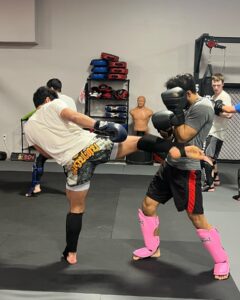
Range and Rhythm: Muay Thai Kicking Fundamentals
Power may be one of the first things people notice about Muay Thai kicks, but an effective kick depends on much more than how hard

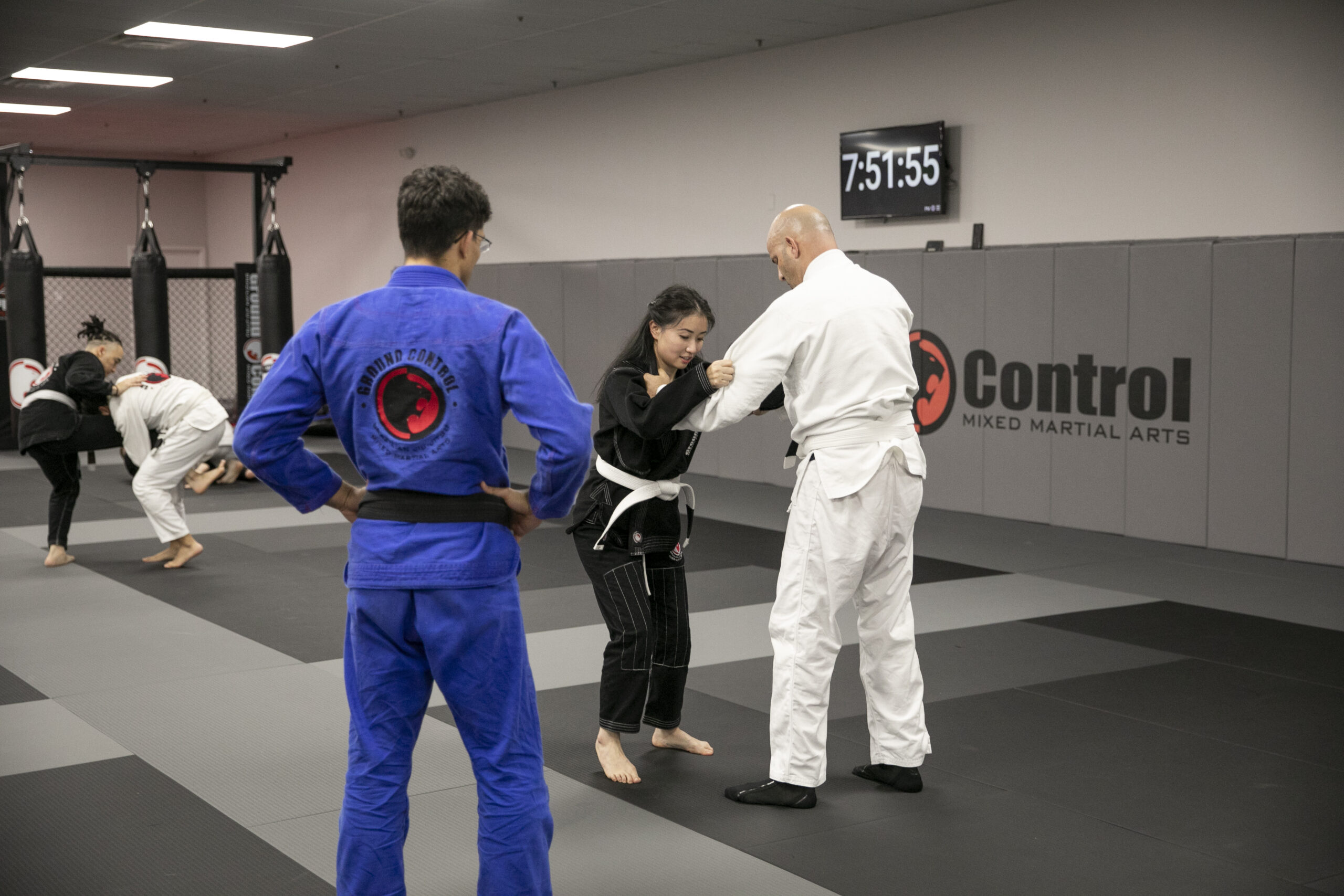
Gi vs. no-gi jiu-jitsu is a discussion most grapplers eventually have, and many people develop strong preferences for one format over the other. The gi is the traditional form of Brazilian Jiu-Jitsu, while no-gi has grown into a competitive discipline of its own. Both formats are contested at the highest levels, and organizations like the International Brazilian Jiu-Jitsu Federation (IBJJF) host championships for each.
The core techniques overlap more than many people expect. What changes is what each person can grip, how quickly exchanges develop, and which positions prove most effective. Neither format is a lesser version of the other.
In the gi, the collar, sleeves, lapel, and pants provide both grapplers with fixed handles. Much of each exchange involves grip fighting, which means establishing the grips you want while breaking the ones your opponent has secured. These handles allow grapplers to control distance, pull a partner off balance, and create opportunities for sweeps and passes.
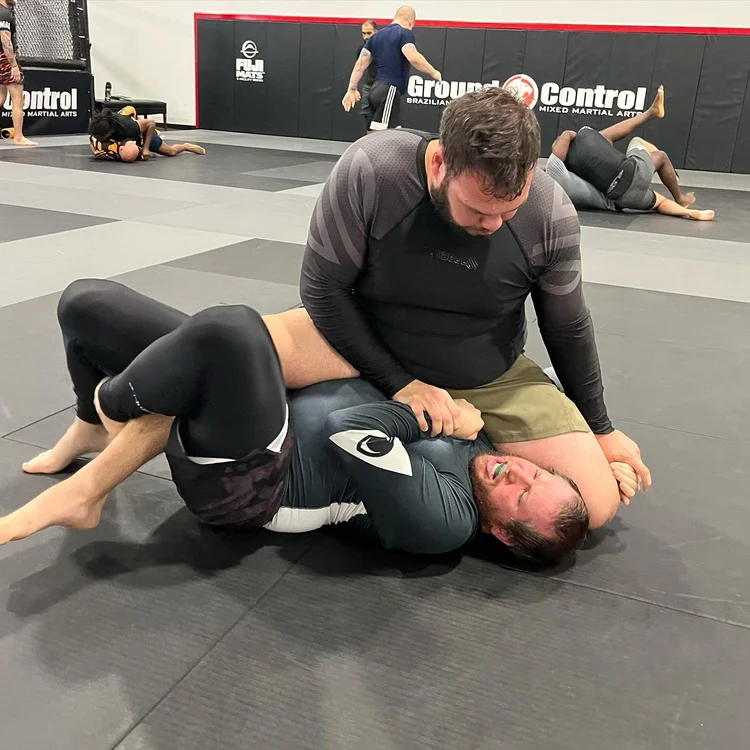
No-gi still involves plenty of grips, but they come from the body rather than clothing. Wrist control, underhooks, overhooks, head control, and body locks replace the sleeve and collar grips used in the gi. Since sweat can make these holds slippery, grapplers often have to re-establish their control throughout an exchange.
Clothing grips can slow an exchange down. Once a strong grip is established, breaking it requires effort, which allows positions to be maintained longer and the pace to build gradually. That patience and attention to detail are important parts of what draws many practitioners to gi jiu-jitsu.
No-gi generally moves faster. With less clothing to hold on to, partners can escape positions more easily, and scrambles often happen more frequently. Consider a guard pass: in the gi, a grip on the pants or lapel can help a passer control the hips and limit the opponent’s ability to recover guard. In no-gi, the passer often needs to control the legs, hips, and upper body directly to prevent that recovery.
Our guide to how scrambles work in no-gi explores these exchanges in greater detail.
Many gi guards rely on grips that use the clothing. Spider guard, lasso guard, and worm guard all depend on sleeve or lapel grips to manage distance and posture. In no-gi, guards such as butterfly, half guard, and seated guard rely more on underhooks, head control, and body positioning, while leg entanglements tend to appear more often.
Armbars, triangles, kimuras, and rear-naked chokes are used in both formats, although the details of finishing a submission can differ depending on whether fabric is available to grip. Cross-collar chokes depend on the gi itself. Guillotines, D’Arce chokes, and anacondas are common in no-gi, but none is exclusive to that format. Which submissions are allowed also depends on the organization, belt level, and competition rules, particularly when it comes to leg attacks.
Takedowns follow a similar pattern. In the gi, judo-style grips on the lapel and sleeve create opportunities for throws and trips. Without those grips, takedowns tend to draw more heavily from wrestling, including single legs, double legs, snap downs, and body locks. Wrestling and judo principles can still apply to both formats, but the grips and setups need to be adjusted.
Without a jacket to grip, no-gi control relies on the body itself through head position, underhooks, wrist control, and body locks. These same grips and positions are used by fighters in MMA, which is why no-gi grappling often translates more directly into that environment. The wrestling-style takedowns and scrambles involved also resemble many of the exchanges that happen inside the cage.
MMA introduces challenges that a no-gi BJJ match does not. Fighters must account for strikes and the cage, and a position that works well when the main goal is securing a submission may need to change when punches are involved. No-gi provides useful grappling tools, but applying them effectively in MMA requires taking these additional factors into consideration.
That does not mean the gi is less useful for someone interested in MMA. Pressure, balance, and positional control are developed in both formats, and many fighters train in both. Our guide to moving from BJJ to MMA covers that transition in more detail.
Each format can expose weaknesses that the other might hide. Strong grips in the gi can sometimes compensate for loose body positioning, but no-gi can reveal that weakness quickly. Similarly, fast scrambles in no-gi can make it easier to overlook missing technical details, while the slower grip fighting of the gi tends to bring those details back into focus.
That is why many grapplers approach the two formats as complementary forms of training. Time spent in the gi sharpens how a person thinks about grips and posture, while no-gi develops the ability to control another person’s body without relying on clothing grips. There is nothing wrong with having a favorite, either. Both formats offer plenty to work on, and training in both can make familiar habits easier to recognize.
Whichever format you decide to try first, the fundamentals carry over. At Ground Control Columbia, we offer Brazilian Jiu-Jitsu and MMA classes for anyone interested in learning these martial arts and developing their grappling skills.

Power may be one of the first things people notice about Muay Thai kicks, but an effective kick depends on much more than how hard


Backpacks are coming out, school supplies are ready, and families are shifting from summer schedules back into the school-year routine. For Ground Control Columbia families,
Summer has a way of changing everyone’s routine. Vacations fill the calendar, weekends seem to disappear, and before you know it, a week or two